Volumetric Dual-Tank Fuel Probe Calibration Guide for Heavy Trucks
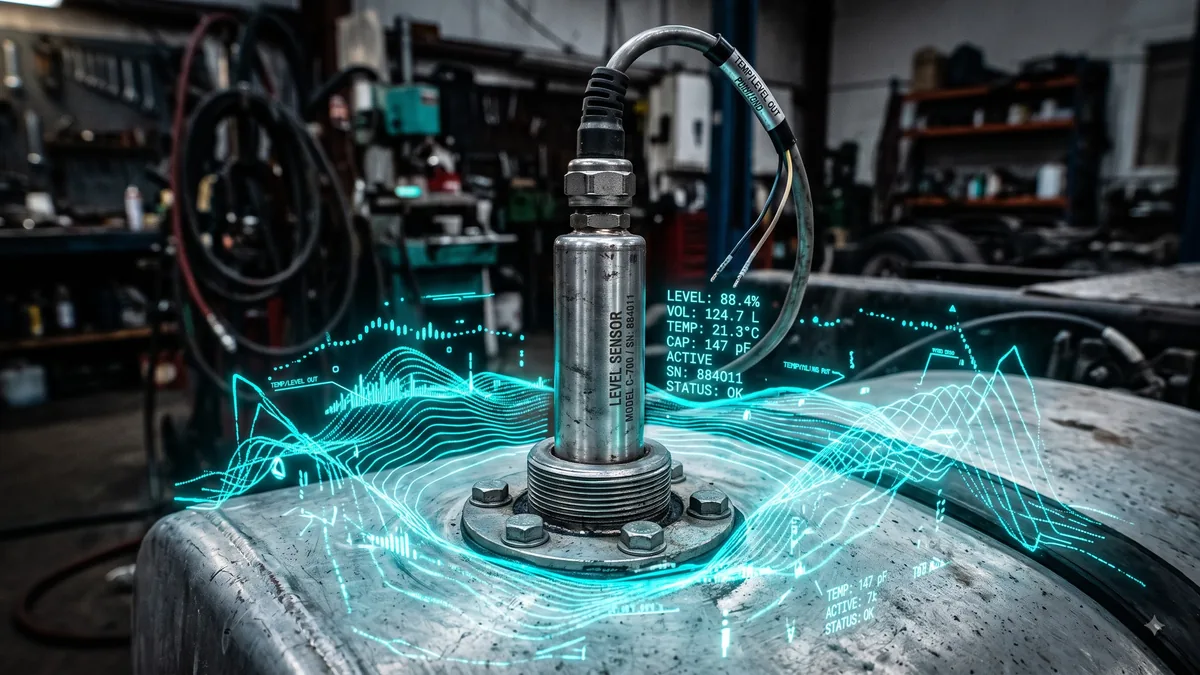
Table of Contents
E-Mobility & EV Fleets Telematics
WizIOT EV-BMS Telematics Controller + CAN-bus J1939 / CANopen Sniffer
Achieving ±0.2% fuel measurement accuracy across heavy commercial haulage trucks requires more than just installing a capacitive sensor inside a diesel tank. Without precise volumetric calibration, irregularities in fuel tank geometry—such as rounded corners, internal baffles, and dual-tank cross-feed equalization pipes—cause severe measurement errors.
This engineering guide details the 10-point volumetric calibration methodology required for dual-tank commercial trucks to ensure audit-ready fuel reporting, eliminate false theft alerts, and catch real-time siphoning events.
---
Why Standard Mathematical Estimation Fails
Many basic telematics vendors apply linear mathematical formulas to calculate fuel volume based on sensor immersion depth. However, real-world commercial fuel tanks are rarely perfect rectangular prisms.
+-----------------------------------------------------------------------------------+
|                        REAL-WORLD TANK GEOMETRY VS LINEAR DEPTH                   |
+-----------------------------------------------------------------------------------+
|  [Rounded Tank Ends]     --> Non-linear volume per centimeter at top & bottom      |
|  [Internal Baffles]      --> Fuel sloshing delay & temporary level displacement    |
|  [Dual-Tank Interconnect]--> Passive gravity equalization lag between primary/aux   |
|                                                                                   |
|  SOLUTION: 10-Point Volumetric Flowmeter Calibration Table (ISO/IEC 17025)       |
+-----------------------------------------------------------------------------------+
Consequences of Improper Calibration: 1. **False Fuel Theft Alarms:** Level fluctuations caused by sloshing or tank slope trigger false siphoning alerts to dispatch. 2. **Un-Detected Slow Fuel Drops:** Small-scale siphoning (20-30 liters) goes undetected within uncalibrated dead zones. 3. **Dual-Tank Equalization Errors:** As fuel flows passively between primary and auxiliary tanks, linear sensors report false fuel consumption spikes.
---
The Step-by-Step 10-Point Volumetric Calibration Protocol
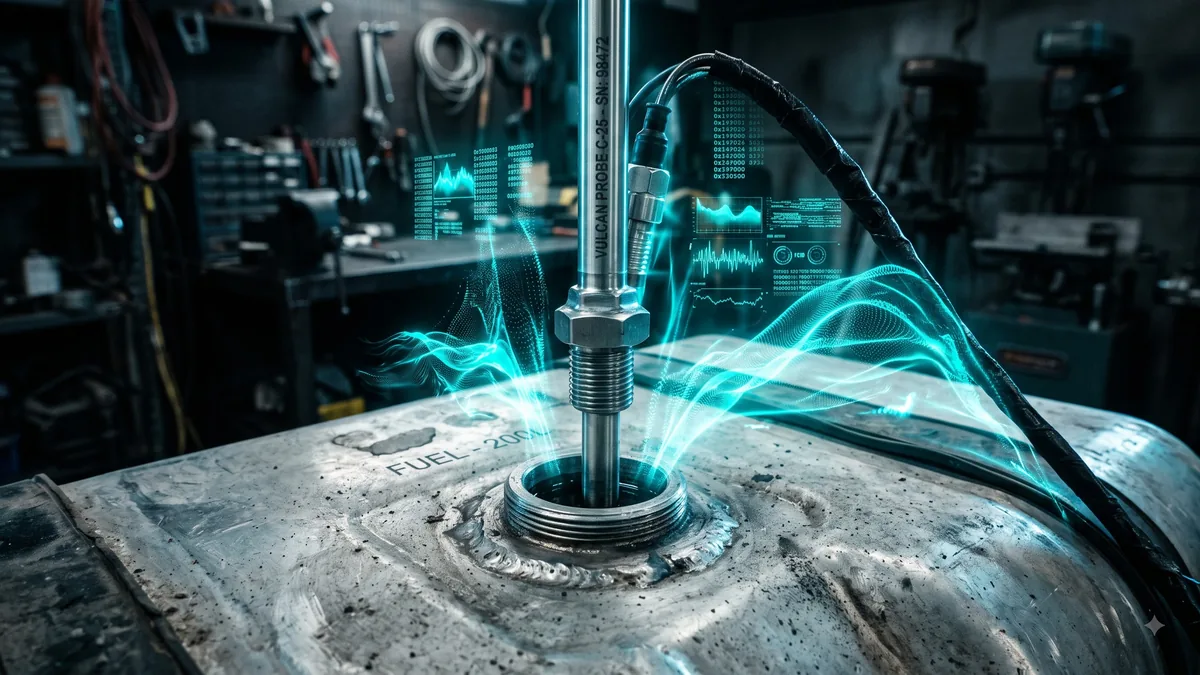
Step 1: Tank Inspection & Physical Probe Trimming Before calibration begins, inspect tank interiors for sludge or water contamination. Cut the capacitive probe tube to length—leaving a 20mm gap above the tank bottom to prevent sediment short-circuiting—and perform dry (air) and wet (diesel) baseline frequency reference calibration.
Step 2: Complete Tank Drain & Zero Baseline Completely drain both primary and auxiliary fuel tanks using a high-flow fuel transfer pump. Record the empty sensor frequency baseline ($F_{empty}$) on the telematics gateway.
Step 3: Incremental 10-Point Metered Dispensing Connect a certified ISO/IEC 17025 traceable digital flowmeter to the fuel nozzle. Dispense fuel into the tanks in 10 equal volumetric increments (e.g., for a 600-liter combined dual-tank system, add exactly 60 liters per step).
+-----------------------------------------------------------------------------------+
|                        10-POINT CALIBRATION TABLE MATRIX                          |
+-----------------------------------------------------------------------------------+
| Step #  | Metered Volume (Liters) | Primary Sensor Frequency | Aux Sensor Frequency|
| 0 (Empty)| 0 L                     | 1,200 Hz                 | 1,200 Hz            |
| 1       | 60 L                    | 1,450 Hz                 | 1,320 Hz            |
| ...     | ...                     | ...                      | ...                 |
| 10 (Full)| 600 L                  | 3,850 Hz                 | 3,850 Hz            |
+-----------------------------------------------------------------------------------+
Step 4: Multi-Point Polynomial Interpolation Upload the 10-point frequency-to-volume mapping table to the WizIOT cloud platform. The platform applies 3rd-order polynomial spline interpolation to create a smooth, highly accurate volumetric lookup curve.
---
4 Technical Rules for Dual-Tank Equalization Systems
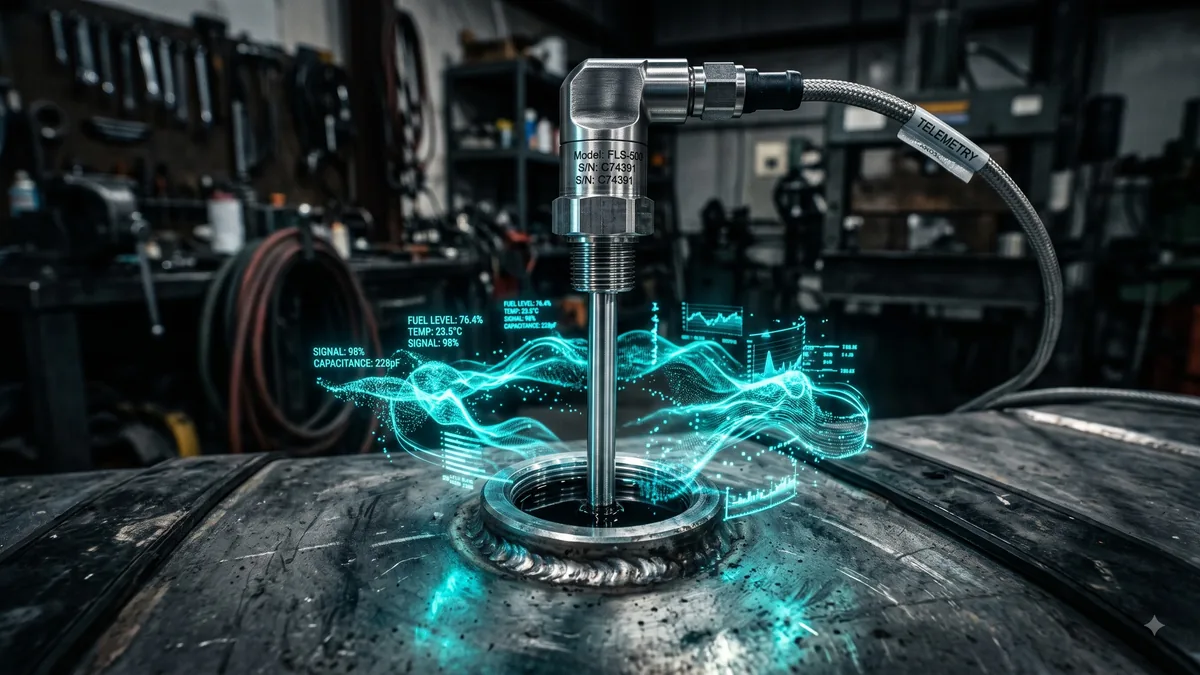
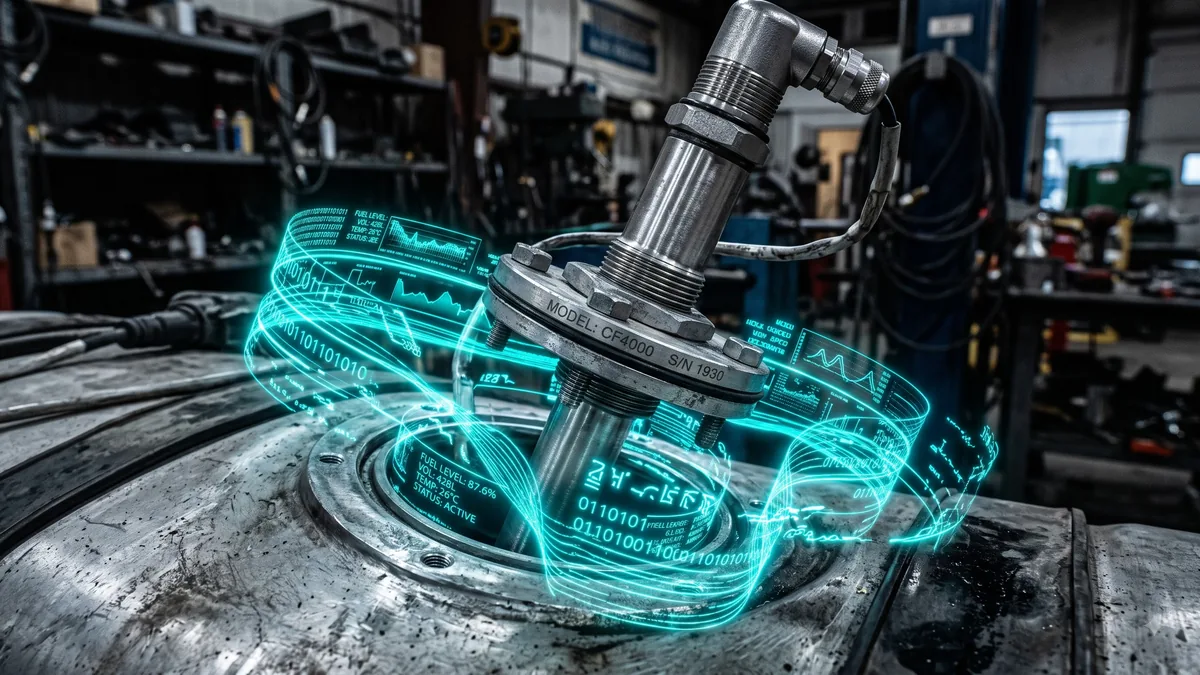
1. **Dual Probe Installation Required:** Always install dedicated capacitive probes in *both* primary and auxiliary tanks. Relying on a single probe in the main tank leads to massive errors during inter-tank fuel transfer. 2. **Synchronized Frequency Logging:** Telematics gateways must read both probe frequencies simultaneously at 1-second intervals to calculate combined total fuel volume correctly. 3. **Slosh Filtering Algorithms:** WizIOT applies moving median digital filtering (over 60-second windows) to suppress fuel sloshing spikes caused by vehicle acceleration, braking, and cornering. 4. **Thermal Expansion Correction:** Diesel expands by approximately 0.08% per °C. WizIOT normalizes all volume calculations to +15°C standard reference temperatures using integrated sensor RTD data.
---
7 Calibration Audit Questions for Fleet Engineers
1. *Does your installation process use certified digital flowmeters to build multi-point calibration tables?* 2. *How does your software handle fuel sloshing spikes during stop-and-go city driving?* 3. *Do you install capacitive probes in BOTH tanks on dual-tank truck configurations?* 4. *What clearance is maintained between the bottom of the probe tube and the tank floor to avoid sediment shorts?* 5. *Can the calibration table be updated remotely over-the-air (OTA) if a tank is replaced?* 6. *Does your fuel monitoring software normalize volume readings for fuel thermal expansion?* 7. *Do you issue official ISO/IEC 17025 calibration certificates upon completing depot installations?*
---
Achieve Audit-Ready Fuel Precision with WizIOT
Stop fuel theft, eliminate false alarms, and gain total control over your fleet's diesel consumption. Schedule a consultation with WizIOT fuel engineering specialists.
Book Your Fuel Calibration Consultation | Explore Fuel Telematics
---
Frequently Asked Questions (FAQs)
Q1: Why can't I rely on CAN-bus float level sensors for fuel theft detection? Factory CAN-bus arm floats have low resolution (often 5-10% steps), stick easily, and cannot detect small siphoning events under 30 liters. Capacitive probes deliver continuous ±0.2% measurement.
Q2: How long does a 10-point volumetric tank calibration take per truck? Using WizIOT high-flow automated calibration rigs, a complete dual-tank 10-point calibration takes approximately 35 to 45 minutes per vehicle.
Q3: What happens if a fuel probe gets contaminated with water? Water is more conductive than diesel and causes sensor frequency out-of-range errors. WizIOT sensors feature water bottom alarms that notify dispatchers immediately if water accumulates in the tank.
Q4: Can WizIOT fuel probes be transferred to new trucks when old vehicles are decommissioned? Yes. Probes can be uninstalled, re-trimmed or fitted with extension tubes, and re-calibrated on new fleet vehicles.
Q5: How does WizIOT detect theft when a driver siphons fuel while idling? WizIOT monitors the relationship between CAN-bus fuel consumption rate and tank volume drop. If tank volume drops faster than engine fuel burn rate allows, a siphoning alert is instantly triggered.
---
Related Articles
- ADAS Forward Collision Warning Systems for Highway Freight Fleets
- Container Chassis & Unpowered Trailer Tracking with Solar BLE Telematics
- Dual-AI DMS Cameras: Stopping Driver Fatigue & Distraction in Long-Haul Fleets
- DMS Driver Fatigue Scorecards: Reducing Micro-Sleep Accidents by 75%
---
Explore WizIOT Solutions
Target Telematics Hubs & Enterprise Solutions
Protect Your Commercial Fleet Today
Request a live hardware demonstration, ±0.2% capacitive probe calibration certificates, and real-time anti-theft gateway trials.