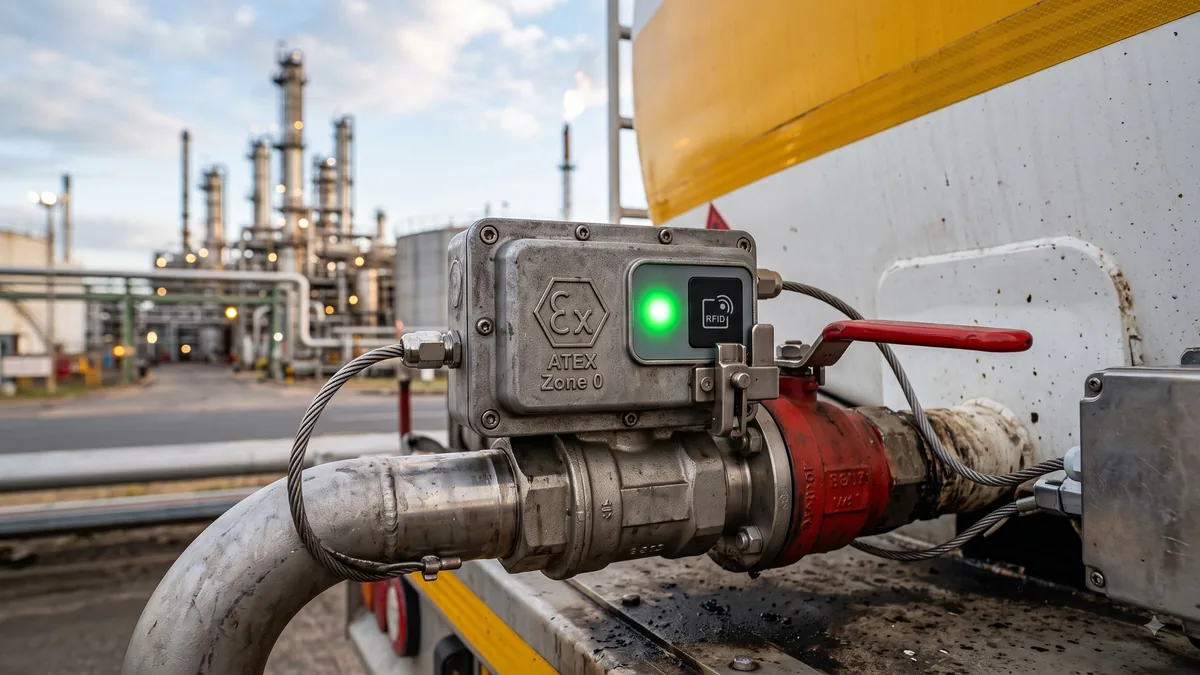
Anti-Hijack Telematics & Jammer-Proof GPS for Highway Freight in Mexico

Table of Contents
- The Operational Crisis: RF Jamming & Highway Hijackings in Mexico
- 4 Engineering Pillars of Jammer-Proof Anti-Hijack Telematics
- Proven Field Case Study: Mexican Distribution Carrier
- 7 Security Audit Questions for LATAM Fleet Directors
- Deploy Jammer-Proof Anti-Hijack Protection for Your Fleet
- Related Articles
- Explore WizIOT Solutions
E-Mobility & EV Fleets Telematics
WizIOT EV-BMS Telematics Controller + CAN-bus J1939 / CANopen Sniffer
Freight haulage across high-risk corridors in Mexico—such as the Mexico City to Veracruz highway (Highway 150D) and the Puebla-Querétaro transport axis—faces unprecedented security threats. Organized cargo theft syndicates routinely deploy portable RF signal jammers ("boomerang" jammers) to blind standard cellular and GPS tracking devices before hijacking tractor-trailers.
Relying solely on consumer-grade GPS trackers or unencrypted cellular SIMs leaves transport operators exposed to total loss of cargo, vehicle destruction, and severe insurance penalty spikes. Modern enterprise fleet security in Latin America requires a multi-layered, jammer-proof telematics architecture designed to maintain operational visibility and trigger autonomous safety protocols even when primary signals are blocked.
---
The Operational Crisis: RF Jamming & Highway Hijackings in Mexico
When a heavy haulage truck enters a high-risk transit zone in Central Mexico, thieves operating from trailing vehicles activate multi-band RF jammers targeting GSM, 3G, LTE, and GNSS frequencies. Standard GPS trackers immediately go offline, rendering dispatcher dashboards blind.
Operational Vulnerabilities of Unprotected Fleets: 1. **Blind Spot Exploitation:** Thieves force driver stops at unauthorized roadside locations while signal jammers prevent panic button alerts from reaching security operations centers (SOC). 2. **Fuel Tank Siphoning & Trailer Decoupling:** Once the vehicle is hidden, cargo is transferred to secondary trucks within 20 minutes while fuel is siphoned. 3. **Insurance Claim Denial:** Commercial insurers in LATAM increasingly reject theft indemnity claims if the carrier cannot prove the vehicle was equipped with certified anti-jamming telematics and secondary covert positioning.
---
4 Engineering Pillars of Jammer-Proof Anti-Hijack Telematics
+-----------------------------------------------------------------------------------+
|                        WIZIOT LATAM ANTI-HIJACK ARCHITECTURE                      |
+-----------------------------------------------------------------------------------+
|  [Multi-Constellation GNSS] --> [RF Interference Sensor] --> [Internal Memory]    |
|             |                              |                        |             |
|             v                              v                        v             |
|  [Covert Secondary Tracker] ----> [Limp-Mode Engine Kill] ----> [Armed SOC API]   |
+-----------------------------------------------------------------------------------+
1. Multi-Constellation GNSS & RF Interference Detection Standard trackers rely exclusively on GPS L1 signals, which are easily overpowered by low-cost jammers. WizIOT gateways utilize multi-constellation receivers locking onto GPS, GLONASS, Galileo, and BeiDou simultaneously across multiple frequencies. When RF interference threshold spikes are detected, the gateway immediately flags an active jamming attempt before signal loss occurs.
2. Autonomous Offline Logic & Speed-Restricted Immobilization If primary cellular connectivity drops due to active jamming, the onboard telematics unit does not freeze. Instead, internal logic checks vehicle speed via CAN-bus. If the truck slows below 15 km/h or comes to a complete stop during an active jamming alert, the system automatically triggers a speed-restricted engine immobilization sequence, preventing thieves from driving the truck away.
3. Covert Battery-Powered Secondary Trackers Primary telematics units mounted under the dashboard are easily discovered by experienced thieves. WizIOT deploys covert secondary trackers hidden inside chassis crossmembers or trailer reefer units. Equipped with 5-year internal batteries and hybrid LBS/BLE positioning, secondary trackers remain silent during transit and wake up periodically to broadcast precise location coordinates even if the primary battery disconnects.
4. Direct API Integration with Regional Armed Response Units During an active hijacking event, automated webhooks push encrypted vehicle telemetry, last-known GPS coordinates, and driver biometric status directly to private security armed response centers and local law enforcement dispatchers in Mexico City, Puebla, and Veracruz.
---
Proven Field Case Study: Mexican Distribution Carrier
- **Fleet Profile:** 120 heavy tractor-trailers transporting consumer electronics and food products between Mexico City and Veracruz.
- **Historical Challenge:** Experienced 14 highway hijacking attempts in 12 months, resulting in $3.2M USD in stolen cargo and a 45% increase in annual fleet insurance premiums.
- **WizIOT Deployment:** Installed WizIOT anti-jamming GNSS gateways, covert secondary trackers, and speed-restricted engine cut-off relays paired with a 24/7 armed response API integration.
- **Quantitative Outcome:** Over the subsequent 18 months, 12 hijacking attempts were recorded. In all 12 incidents, RF jamming detection triggered safe engine immobilization within 90 seconds of stopping. 100% of vehicles and cargo were recovered, leading to a 32% reduction in insurance premiums.
---
7 Security Audit Questions for LATAM Fleet Directors
Before renewing telematics contracts for fleets operating in Latin America, ask your vendor:
1. *Does your hardware include onboard RF interference detection to log jamming attempts before connectivity is lost?* 2. *Does the remote engine kill logic enforce speed-restricted limp mode to prevent high-speed steering lockups?* 3. *Are secondary trackers equipped with independent internal batteries capable of operating for 3+ years without main power?* 4. *Can your platform automatically switch between multiple regional SIM networks (Telcel, AT&T Mexico, Movistar) to prevent dead-zone blackouts?* 5. *What is the IP rating of secondary chassis-mounted trackers against heavy road mud and high-pressure steam cleaning?* 6. *Does your telematics API integrate directly with local Mexican security operations centers (SOC) for rapid dispatch?* 7. *Do you provide full compliance documentation for insurance underwriter premium discounts in LATAM?*
---
Deploy Jammer-Proof Anti-Hijack Protection for Your Fleet
Do not wait for your next vehicle hijacking to upgrade your security architecture. WizIOT provides certified anti-jamming hardware, covert secondary trackers, and on-site engineering support across Mexico City, Guadalajara, Monterrey, and Puebla.
Schedule Your LATAM Security Consultation | Explore Security Solutions
---
Frequently Asked Questions (FAQs)
Q1: How does RF jamming detection work on commercial trucks? WizIOT telematics gateways constantly monitor Signal-to-Noise Ratios (SNR) across cellular and GNSS bands. If noise levels spike rapidly above normal environmental background noise, the gateway recognizes an active jammer and executes pre-programmed offline security routines.
Q2: Is remote engine immobilization safe on mountain highways? Yes. WizIOT enforces strict UN ECE R116 and ISO 26262 functional safety protocols. Engine cut-off will never activate while a vehicle is traveling at highway speeds; it engages only when vehicle speed drops below 15 km/h or comes to a complete halt.
Q3: How long do secondary covert trackers last on internal battery? WizIOT secondary covert trackers utilize ultra-low power LiSOCl2 batteries designed to last up to 5 years under standard 1-update-per-day reporting intervals, or up to 6 months under continuous emergency tracking mode.
Q4: Can signal jammers prevent panic button alerts from reaching dispatch? If primary cellular bands are completely jammed, WizIOT devices buffer the panic event locally and transmit via secondary RF/satellite fallback channels or execute automatic engine immobilization if the vehicle stops.
Q5: Does WizIOT offer on-site installation support in Mexico? Yes. WizIOT certified field engineers provide depot installation, stealth wiring placement, and 10-point anti-tamper verification across Mexico City, Puebla, Querétaro, and Monterrey.
---
Related Articles
- How GPS Jammer Detection Prevents Cargo Hijacking on Mexican Highways
- Cargo Theft Security & Cold Chain Telematics out of Port of Santos, Brazil
- Detecting Temperature-Compensated Fuel Theft in Extreme Heat on South African Routes
- How Romanian Fleets Unified Speed Assistance and Hours-of-Service Monitoring
---
Explore WizIOT Solutions
Target Telematics Hubs & Enterprise Solutions
Protect Your Commercial Fleet Today
Request a live hardware demonstration, ±0.2% capacitive probe calibration certificates, and real-time anti-theft gateway trials.