Silent In-Cabin Panic Buttons: How Driver Emergency Alerts Trigger Instant Armed Response
Table of Contents
- Why Visible Dashboard Panic Buttons Put Drivers at Risk
- 4 Technical Components of WizIOT Silent Emergency Systems
- Real-World Impact: South African Highway Recovery Case Study
- Questions to Ask Telematics Vendors About Panic Systems
- Equip Your Fleet with Silent Anti-Hijack Protection Today
- Related Articles
- Explore WizIOT Solutions
E-Mobility & EV Fleets Telematics
WizIOT EV-BMS Telematics Controller + CAN-bus J1939 / CANopen Sniffer
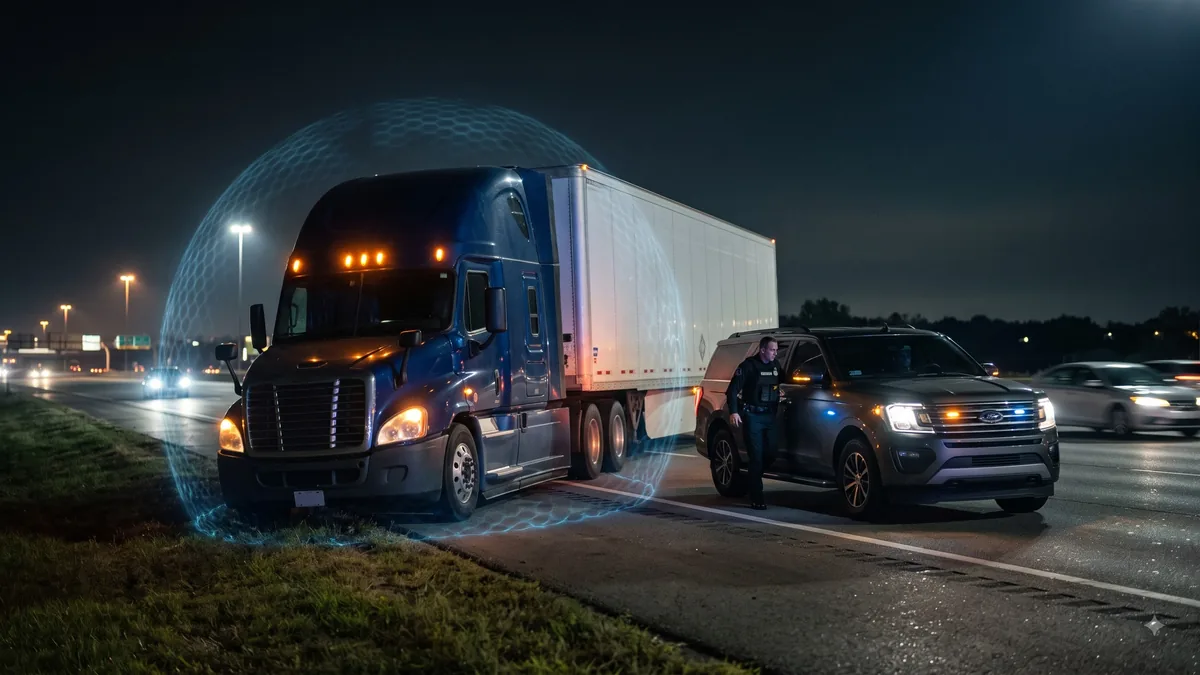
At 02:15 AM along a dark highway corridor, two armed assailants force open the driver door of a commercial semi-truck stopped at a traffic intersection. The driver, facing direct physical threat, cannot pull out a mobile phone or reach for a dashboard switch without provoking violence. However, as the hijackers enter the cab, the driver discreetly taps a heavy-duty foot pedal switch mounted in the footwell.
In high-risk commercial transport operations—particularly across highway corridors in South Africa, Kenya, Nigeria, and Mexico—driver panic alert systems are the first line of defense during active hijacking attempts.
If your commercial fleet operates through high-risk freight corridors, relying on manual phone calls or visible dashboard buttons is dangerous. This guide explains how silent footwell panic switches trigger instant control room alerts and automated armed response dispatch.
---
Why Visible Dashboard Panic Buttons Put Drivers at Risk
Many generic telematics installers fit cheap red push-buttons directly on the center dashboard console.
Visible dashboard panic buttons create critical operational security flaws: 1. **Immediate Hijacker Retaliation:** Hijackers entering the cab immediately notice red emergency buttons; seeing a driver reach for the dashboard often triggers immediate physical assault. 2. **Accidental False Triggers:** Exposed dashboard buttons are easily bumped by drivers reaching for paperwork or coffee cups, generating constant false alarms. 3. **Loss of Access:** Once a driver is removed from the cab or forced into the sleeper berth, dashboard buttons become completely inaccessible.
A professional anti-hijack emergency system requires concealed, multi-location silent triggers that drivers can activate without visual detection.
---
4 Technical Components of WizIOT Silent Emergency Systems
1. Concealed Heavy-Duty Footwell Pedal Switches
WizIOT replaces visible dashboard buttons with heavy-duty, industrial foot pedal switches installed discreetly inside the driver footwell.
- **Concealed Foot Operation:** Positioned near the clutch or dead-pedal rest, allowing the driver to press the switch using subtle foot pressure while keeping their hands visible to hijackers.
- **3-Second Hold Logic:** Requires continuous foot pressure for 3.0 seconds to prevent accidental triggers caused by routine foot movements.
2. Secondary Hidden Sleeper Berth & Wireless Keyfob Triggers
Hijackings frequently occur while drivers are resting in trailer sleeper berths. WizIOT installs: - **Sleeper Berth Micro-Switches:** Flush-mounted silent buttons inside sleeper wall panels. - **Wearable Encrypted Wireless Keyfobs:** Compact RF panic keyfobs worn around the driver’s neck or wrist, operational up to 50 meters outside the cab.
3. Sub-3-Second Encrypted Emergency Telemetry
When a panic switch is triggered, the WizIOT telematics gateway immediately elevates data transmission priority, broadcasting a high-priority **Emergency Hijack Signal** to cloud servers in under 3 seconds.
The alert packet bypasses normal routine queuing, containing: - Exact GPS & Cell-Tower Coordinates - Real-Time Vehicle Speed & Heading - Driver ID & Assigned Freight Profile - Live Audio Monitoring Stream (Optional Cab Microphone Activation)
4. Automated API Webhooks to Private Armed Response Networks
Vehicle recovery speed depends on immediate dispatch. WizIOT software features pre-built API webhooks that link directly to national armed security response dispatchers (e.g., Fidelity ADT, Netstar, G4S, KK Security).
The moment a panic alert is verified, WizIOT automatically transmits encrypted vehicle coordinates and tracking links directly to the nearest armed response patrol unit.
---
Real-World Impact: South African Highway Recovery Case Study
A Johannesburg logistics firm operating 75 haulage trucks along the N1 and N3 highways deployed WizIOT silent footwell panic switches and armed response API integration.
Incident Recovery Log: - **01:42:10 AM:** Driver presses concealed footwell panic switch during armed hijack attempt near Vosloorus - **01:42:13 AM:** Control room & armed response dispatcher receive high-priority emergency alert - **01:42:30 AM:** Dispatcher verifies live tracking feed showing abnormal route deviation - **01:43:00 AM:** Nearest armed response patrol unit deployed to intercept coordinates - **01:58:00 AM:** Armed response intercepts truck at off-ramp; hijackers apprehend; driver and R2.8 Million freight secured safely
---
Questions to Ask Telematics Vendors About Panic Systems
1. *Does your panic alert system feature concealed footwell pedal switches rather than visible dashboard buttons?* 2. *Is the panic switch configured with a hold-time delay (e.g., 3 seconds) to prevent accidental false alarms?* 3. *Do you provide wireless panic keyfobs for drivers resting outside or inside sleeper berths?* 4. *Can your platform trigger automated API webhooks directly to private armed security response networks?* 5. *Does the telematics gateway feature backup internal battery power if hijackers disconnect main truck power?*
---
Equip Your Fleet with Silent Anti-Hijack Protection Today
Protect your commercial drivers and high-value freight against armed hijacking. Deploy WizIOT's concealed footwell panic switches, silent emergency telemetry, and automated armed response integration.
Request Driver Security System Proposal
---
Frequently Asked Questions (FAQs)
**Q1: How does the system prevent false alarms if a driver accidentally kicks the footwell panic switch?** WizIOT footwell switches require continuous, deliberate pressure for 3.0 seconds to engage, effectively filtering out accidental momentary kicks.
**Q2: What happens if the panic switch is pressed in a cellular dead zone?** WizIOT gateways store emergency panic alerts in high-priority non-volatile memory, continuously attempting multi-carrier SIM auto-switching and broadcasting the alert the instant any network signal is acquired.
**Q3: Can control rooms listen to live in-cab audio when a panic button is pressed?** Yes. WizIOT telematics gateways can be equipped with silent in-cab microphones that initiate a one-way silent audio stream to the control room upon panic activation, allowing dispatchers to assess driver safety.
**Q4: Are driver panic alert systems compatible with both 12V and 24V commercial vehicle electrical systems?** Yes. WizIOT emergency panic hardware operates across wide DC voltage ranges (9V to 36V), compatible with light commercial vans, heavy rigid trucks, and multi-trailer road trains.
---
Related Articles
- Connecting Telematics to Local Armed Response: How API Integrations Cut Recovery Time to 20 Min
- Truck Hijacking on N3 Highway: Remote Engine Immobilization That Works in 47 Seconds
- Mobile App Engine Kill: How Kenyan Fleets Recover Hijacked Trucks in Under 60 Seconds
- Fuel Theft Monitoring: Real-Time Sensor Data That Caught 34 Drivers in 90 Days (SA Case Study)
---
Explore WizIOT Solutions
Target Telematics Hubs & Enterprise Solutions
Protect Your Commercial Fleet Today
Request a live hardware demonstration, ±0.2% capacitive probe calibration certificates, and real-time anti-theft gateway trials.