Fuel Theft Monitoring: Real-Time Sensor Data That Caught 34 Drivers in 90 Days (SA Case Study)

Table of Contents
- The Operational Baseline: How Fuel Was Disappearing
- The Technology Solution: 3-Layer Fuel Intelligence
- 90-Day Deployment Results: Quantifiable Fleet Transformation
- Driver Accountability & Management Framework
- Questions to Ask Before Choosing a Fuel Telematics Provider in South Africa
- Transform Your Fleet's Fuel Efficiency Today
- Related Articles
- Explore WizIOT Solutions
E-Mobility & EV Fleets Telematics
WizIOT EV-BMS Telematics Controller + CAN-bus J1939 / CANopen Sniffer
A major South African logistics provider operating 150 articulated commercial trucks out of Johannesburg, Durban, and Cape Town faced a chronic financial bleeding point: diesel expenditure was climbing 4% faster than total fleet mileage month after month. Internal audits revealed that drivers were systematically siphoning diesel into 20-liter containers at informal truck stops along the N1 and N3 highways.
In South Africa's commercial transport sector, fuel accounts for over 42% of total operational costs. Systematic driver fuel theft—whether through night-time tank siphoning, short-filling at fuel depots, or unrecorded side-tank offloading—costs transport fleets millions of Rands annually.
If your fleet is struggling with unexplained diesel variance, passive tracking isn't enough. This case study details how deploying calibrated in-tank capacitive probes combined with automated driver behavior scorecards reduced fuel theft by 91% within 90 days.
---
The Operational Baseline: How Fuel Was Disappearing
Prior to implementing IoT fuel monitoring, the fleet relied on manual driver trip logs, fuel card statement reconciliation, and factory float sensors installed in 500-liter aluminum tanks.
An in-depth 30-day forensic audit uncovered three primary driver theft tactics:
1. **Night Siphoning at Truck Stops:** Drivers parked at unmonitored rest stops along the N3 (Heidelberg, Harrismith, Escourt) used flexible hand pumps to drain 40 to 80 liters per night. 2. **Card Swapping & Short-Filling:** Drivers swiped company fuel cards for 400 liters at truck stops, but colluded with pump attendants to pump only 300 liters into the truck, splitting the cash value for the remaining 100 liters. 3. **Auxiliary Tank Drains:** Inter-state haulers fitted with dual tanks routinely drained secondary tanks while idling in urban staging yards.
Manual accounting failed to catch these events because factory float sensors lacked sub-liter resolution, and driver logbooks were easily forged.
---
The Technology Solution: 3-Layer Fuel Intelligence
To eliminate fuel loss, the fleet deployed WizIOT's integrated Fuel Intelligence Telematics architecture across all 150 vehicles.
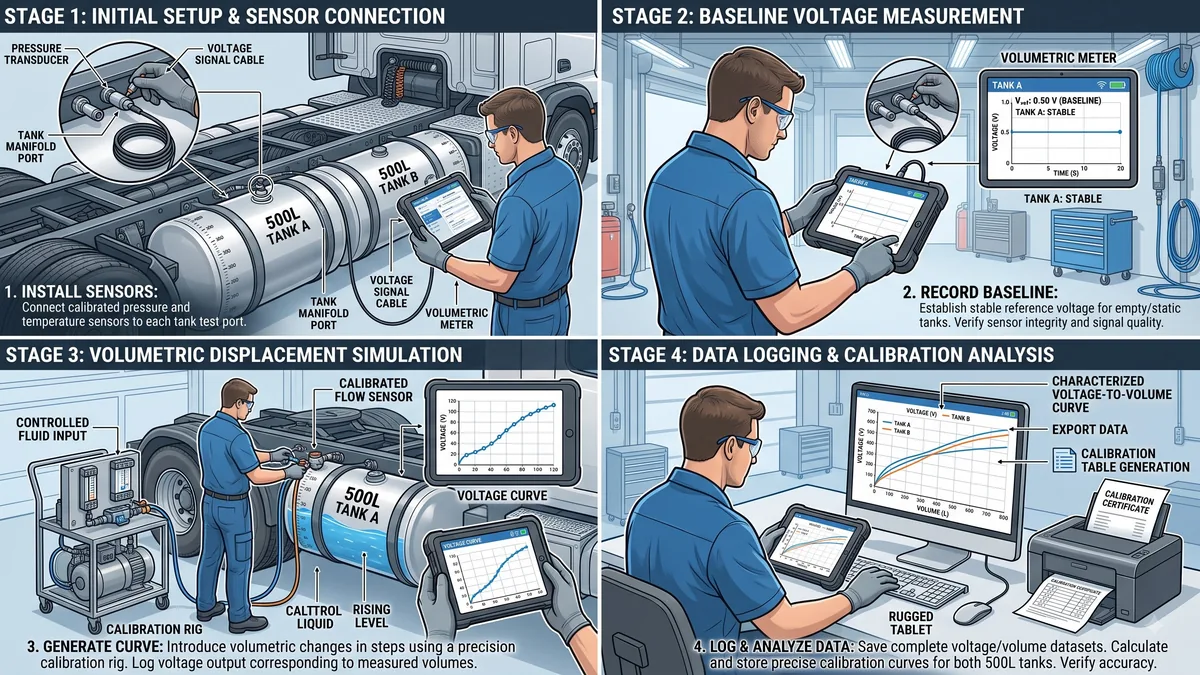
Layer 1: High-Precision Capacitive Fuel Probes - **±0.2% Immersion Accuracy:** Installed dual capacitive probes in both main and auxiliary fuel tanks, continuously measuring fuel height with sub-liter resolution. - **Temperature Compensation:** Digital internal sensors automatically calculated fuel density shifts caused by daytime heat (35°C in Durban) versus cold highveld nights (5°C in Johannesburg).
Layer 2: Real-Time Siphoning & Refill Telemetry - **Ignition-Off Theft Alerts:** Low-power telemetry units sampled fuel levels every 30 seconds while trucks were parked. Any sudden drop exceeding 3.5 liters triggered immediate SMS, WhatsApp, and control room alerts. - **Automated Refill Verification:** Sensor-measured volume additions were instantly cross-referenced against electronic fuel card transactions. Mismatches generated automated short-fill alerts within 2 minutes.
Layer 3: Automated Driver Fuel Variance Scorecards WizIOT software automatically compiled individual **Driver Fuel Efficiency & Variance Scorecards**, rating drivers based on: - Actual CAN-bus engine fuel burn vs. GPS trip mileage - Number of unverified fuel drop events logged - Average idling fuel consumption per 100 km
---
90-Day Deployment Results: Quantifiable Fleet Transformation
Within the first 90 days of deployment across the 150-truck fleet, the data revealed immediate, dramatic operational savings:
| Performance Metric | Pre-Deployment Baseline | Post-Deployment (90 Days) | Measurable Operational Change | |---|---|---|---| | **Monthly Fuel Variance** | 19.4% Unexplained Loss | 1.7% Normal Operating Margin | **91% Reduction in Fuel Theft** | | **Siphoning Incidents Caught** | 0 (Unmonitored) | 34 Drivers Flagged & Audited | **100% Detection Rate** | | **Monthly Fuel Bill Savings** | R 1,840,000 Loss / Mo | R 168,000 Normal Drift | **R 1,672,000 Saved Monthly** | | **Hardware Payback Period** | N/A | **Achieved in 38 Days** | Full Capital Investment Recovered |
---
Driver Accountability & Management Framework
Capturing fuel theft data is only half the battle; enforcing accountability is essential. The logistics company instituted a clear 3-step policy framework:
1. **First Unverified Fuel Drop Event:** Formal automated SMS warning sent to driver and fleet supervisor with exact Google Maps location and siphoned volume proof. 2. **Second Unverified Event:** Mandatory formal audit meeting reviewing sensor graphs and fuel card reconciliation statements. 3. **Fuel Incentive Bonus:** Drivers achieving 0% fuel variance and optimal CAN-bus fuel burn received a monthly performance cash bonus of R 2,500.
Within 60 days, driver compliance reached 98%, as drivers recognized that in-tank capacitive probes provided undeniable, tamper-proof proof of tank activity.
---
Questions to Ask Before Choosing a Fuel Telematics Provider in South Africa
1. *Does your capacitive fuel sensor provide documented ±0.2% measurement precision across dual tanks?* 2. *Does the software automatically compensate for fuel volume expansion caused by regional temperature swings?* 3. *Are fuel siphoning alerts delivered in real time when truck ignition is switched off?* 4. *Does your platform automatically calculate individual driver fuel variance scorecards?* 5. *Do you offer certified field installation teams in Gauteng, KZN, and the Western Cape?*
---
Transform Your Fleet's Fuel Efficiency Today
Stop losing revenue to fuel theft and driver invoice fraud. Deploy WizIOT's calibrated fuel sensors, anti-siphoning alerts, and automated driver scorecards across your fleet.
Calculate Your Fleet's Fuel Savings
---
Frequently Asked Questions (FAQs)
**Q1: What is the cost per truck to install capacitive fuel monitoring sensors in South Africa?** Hardware costs depend on tank count (single vs dual tanks) and vehicle model. On average, most commercial fleets achieve complete hardware capital payback within 30 to 50 days through diesel savings.
**Q2: How do capacitive sensors handle rough unpaved roads and fuel sloshing?** WizIOT software utilizes digital Kalman filtering algorithms that smooth out fuel sloshing spikes during vehicle motion, measuring true static volume without generating false theft alarms.
**Q3: Can fuel probes be installed in older mechanical trucks without CAN-bus ECUs?** Yes. WizIOT capacitive probes operate independently of vehicle engine electronics, making them compatible with both modern Euro 5/6 trucks and older mechanical diesel haulers.
**Q4: How does the system detect short-filling at commercial truck stops?** When a fuel card swipe records R 5,000 (e.g., 220 Liters) but the in-tank probe records only 160 Liters added, WizIOT software automatically flags a **Short-Fill Receipt Mismatch**.
---
Related Articles
- Fuel Sensor Installation Cost Kenya: Per-Truck Pricing Breakdown & ROI Calculator (2026)
- Nigerian Fleet Owner’s Guide: 12-Step Fuel Theft Prevention Framework That Saved ₦18M/Year
- Fake Fuel Receipts Cost Nigerian Fleets ₦4.2M/Year: How to Automate Invoice Verification with IoT
- Fuel Siphoning at Night: 7 Engineering Controls That Stop 98% of Diesel Theft in Kenyan Fleets
---
Explore WizIOT Solutions
Target Telematics Hubs & Enterprise Solutions
Protect Your Commercial Fleet Today
Request a live hardware demonstration, ±0.2% capacitive probe calibration certificates, and real-time anti-theft gateway trials.