CAN-Bus Fuel Consumption vs. In-Tank Fuel Probes: Which Delivers True Accuracy?
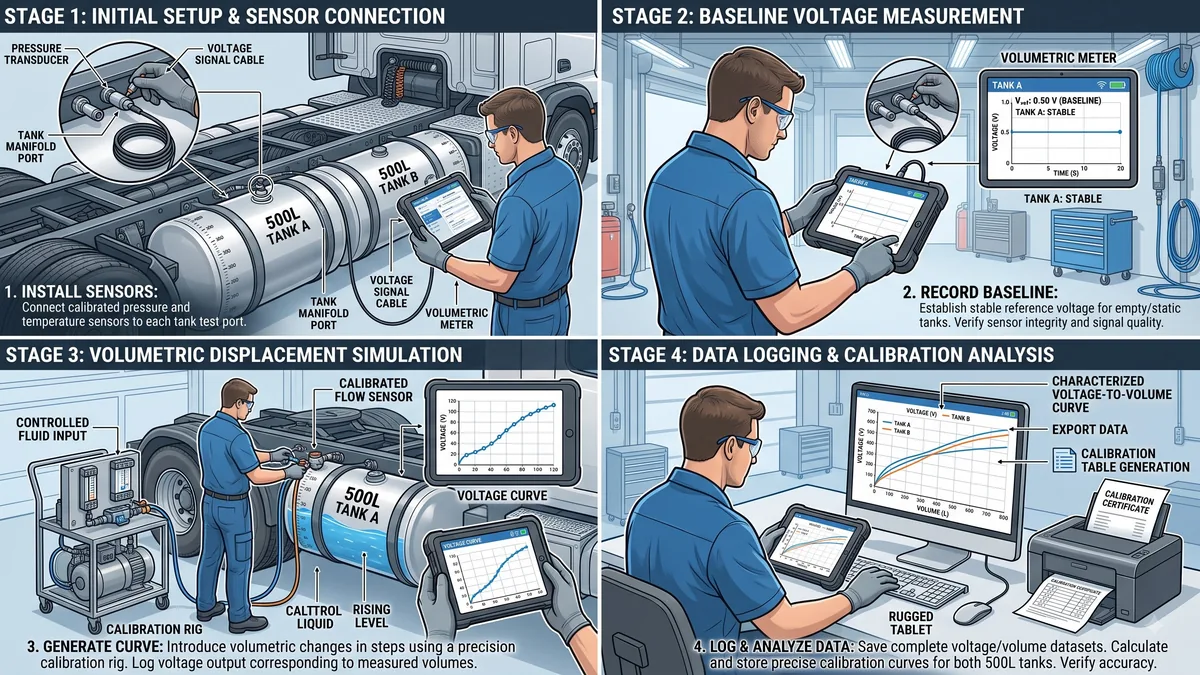
Table of Contents
- Technical Comparison: How CAN-Bus ECU Data & Fuel Probes Work
- 4 Failure Scenarios Where CAN-Bus ECU Data Fails Alone
- Dual-Feed Fuel Telemetry Architecture: Combining Both Data Sources
- Feature Comparison: CAN-Bus Only vs. Capacitive Probes vs. Dual-Feed
- Questions to Ask Telematics Vendors About Fuel Hardware
- Achieve 100% Fuel Security Across Your Commercial Fleet
- Related Articles
- Explore WizIOT Solutions
E-Mobility & EV Fleets Telematics
WizIOT EV-BMS Telematics Controller + CAN-bus J1939 / CANopen Sniffer
A commercial fleet director evaluating fuel monitoring software receives conflicting technical advice: one telematics vendor claims that reading CAN-bus engine fuel data directly from the vehicle ECU is sufficient to track fuel usage, while another vendor insists that installing physical in-tank capacitive probes is mandatory.
In modern telematics engineering, choosing between CAN-bus engine data and physical fuel probes is not an either/or decision—it requires understanding what each data source actually measures.
Relying on CAN-bus ECU data alone leaves your fleet completely blind to siphoning, short-fills, and fuel tank theft. This guide compares CAN-bus fuel telemetry vs. physical capacitive fuel probes, detailing why enterprise fleets combine both for complete fuel security.
---
Technical Comparison: How CAN-Bus ECU Data & Fuel Probes Work
1. How CAN-Bus ECU Fuel Telemetry Works Modern commercial vehicles (Euro 4, 5, and 6 engines) use Engine Control Units (ECUs) that calculate fuel consumption based on high-pressure injector pulse width and fuel rail pressure parameters. Telematics devices read this data via standard SAE J1939 protocols (PGN 65257 - Fuel Economy).
- **What CAN-Bus Measures:** Exact fuel volume *consumed by the engine while running*.
- **Primary Strength:** Outstanding precision for measuring engine efficiency, idle burn rate, and driver throttle behavior.
- **Critical Limitation:** CAN-bus has zero knowledge of fuel tank contents. It cannot measure fuel added during refueling, nor can it detect fuel siphoned out while the engine is turned off.
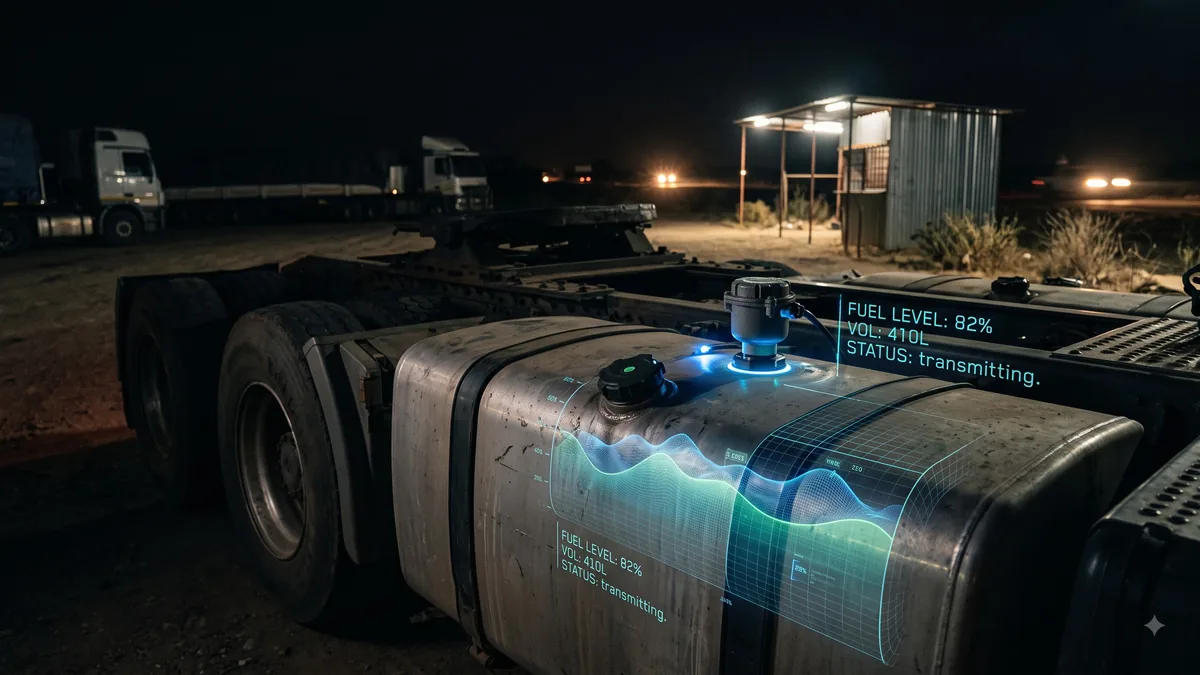
2. How Physical In-Tank Capacitive Fuel Probes Work Capacitive fuel probes submerge directly into fuel tanks, measuring electrical capacitance changes between concentric aluminum tubes to determine precise liquid level height.
- **What Capacitive Probes Measure:** Exact physical volume of fuel *currently inside the fuel tank*.
- **Primary Strength:** Detects refueling additions, detects night-time siphoning while parked, and measures physical tank volume independent of engine operation.
- **Critical Limitation:** Dynamic fuel sloshing during vehicle motion requires digital filtering algorithms to smooth out short-term volume spikes.
---
4 Failure Scenarios Where CAN-Bus ECU Data Fails Alone
Scenario A: Night-Time Fuel Siphoning at Rest Stops A driver parks a truck overnight. Siphoners drain 100 liters of diesel from the fuel tank. Because the truck engine is switched OFF, the ECU is completely unpowered. When the driver starts the truck in the morning, CAN-bus logs report 0 liters consumed, leaving the fleet manager completely unaware of the 100-liter siphoned loss.
Scenario B: Filling Station Short-Filling Fraud A driver swipes a company fuel card for 300 liters at a truck stop, but pumps only 200 liters into the tank, splitting the cash value for the remaining 100 liters. CAN-bus ECU data logs no error because it does not measure tank volume increases during refueling.
Scenario C: Fuel Adulteration & Water Contamination A driver adds 50 liters of water or contaminated fuel into the tank to mask siphoned fuel. CAN-bus ECU metrics cannot detect fluid composition, causing fuel injector damage before the problem is discovered.
Scenario D: Auxiliary Tank Siphoning Fuel is siphoned from a secondary auxiliary tank while driving. Because the engine ECU only monitors fuel entering the engine injectors, auxiliary tank drains go completely undetected by CAN-bus data.
---
Dual-Feed Fuel Telemetry Architecture: Combining Both Data Sources
Enterprise fleet security is achieved by combining CAN-bus ECU data with physical capacitive probes into a unified **Dual-Feed Fuel Intelligence Loop**:
[CAN-Bus ECU Fuel Consumption Data]  ──┐
                                     ├──► [WizIOT Dual-Feed Engine] ──► 100% Anti-Theft Protection
[In-Tank Capacitive Probe Level Data] ──┘
By cross-referencing physical tank drop ($\Delta V_{\text{tank}}$) against ECU engine consumption ($V_{\text{ECU}}$), WizIOT software enforces the fundamental fuel balance equation:
$$\Delta V_{\text{tank}} = V_{\text{refill}} - V_{\text{ECU}} - V_{\text{theft}}$$
If physical tank drop exceeds ECU engine consumption by more than acceptable tolerance, WizIOT flags an immediate **Unauthorized Fuel Discrepancy Exception**.
---
Feature Comparison: CAN-Bus Only vs. Capacitive Probes vs. Dual-Feed
| Telematics Capability | CAN-Bus ECU Data Only | In-Tank Capacitive Probes Only | WizIOT Dual-Feed Architecture | |---|---|---|---| | **Engine Idle Fuel Burn Tracking** | Excellent | Fair | **Superior** | | **Detect Night Siphoning (Ignition OFF)** | Zero Visibility | Excellent | **Instant Real-Time SMS Alert** | | **Detect Pump Short-Filling Fraud** | Zero Visibility | Excellent | **Automated Card API Mismatch Flag** | | **Driver Throttle & RPM Analysis** | Superior | N/A | **Full Driver Scorecard Integration** | | **Complete Fuel Loss Protection** | 20% Coverage | 80% Coverage | **100% Comprehensive Defense** |
---
Questions to Ask Telematics Vendors About Fuel Hardware
1. *Does your telematics solution rely on CAN-bus ECU data alone or include in-tank capacitive probes?* 2. *Can your system detect fuel siphoning when vehicle ignition is switched OFF?* 3. *Does your platform cross-reference CAN-bus fuel burn metrics against physical tank level drops?* 4. *What is the documented measurement error percentage of your capacitive fuel probes (is it ±0.2%)?* 5. *Can your system automatically reconcile fuel card statement APIs against physical tank volume increases?*
---
Achieve 100% Fuel Security Across Your Commercial Fleet
Don't settle for partial fuel visibility. Combine CAN-bus ECU analytics with calibrated in-tank capacitive probes using WizIOT's Dual-Feed Fuel Intelligence platform.
Schedule Technical Fuel Telematics Consultation
---
Frequently Asked Questions (FAQs)
**Q1: Is installing in-tank capacitive probes necessary if my trucks are brand new Euro 6 models?** Yes. Brand new Euro 6 trucks have advanced CAN-bus ECUs, but the ECU still cannot detect fuel siphoning while parked or short-filling at fuel depots. Physical probes remain mandatory for anti-theft security.
**Q2: How does CAN-bus data extraction connect to the truck electronics safely?** WizIOT uses non-intrusive CAN-bus capacitive readers (contactless CAN clamps) that read ECU data without splicing or stripping wires, preserving vehicle manufacturer electrical warranties.
**Q3: Can capacitive fuel probes be installed in irregular plastic or aluminum tanks?** Yes. WizIOT 10-point volumetric tank calibration maps voltage curves for custom tank shapes, ensuring ±0.2% measurement accuracy regardless of tank geometry.
**Q4: How does the dual-feed system handle fuel thermal expansion?** Capacitive probes include internal digital temperature sensors that adjust tank volume calculations for thermal expansion, while CAN-bus ECU fuel mass flow data provides thermal cross-verification.
---
Related Articles
- How to Calibrate Capacitive Fuel Sensors for Dual-Tank Heavy Trucks in 5 Steps
- Fuel Card Fraud vs. IoT In-Tank Sensors: Why Fuel Cards Alone Cannot Stop Siphoning
- How to Calculate Your Fleet’s Fuel Theft ROI & Payback Period in 10 Minutes
- How Drivers Try to Bypass Fuel Sensors (And 5 Tamper-Proof Countermeasures)
---
Explore WizIOT Solutions
Target Telematics Hubs & Enterprise Solutions
Protect Your Commercial Fleet Today
Request a live hardware demonstration, ±0.2% capacitive probe calibration certificates, and real-time anti-theft gateway trials.