Reefer Alarm Silent Failure: The Dual-Alert System That Prevents R1.2M Food Cargo Losses

Table of Contents
- Why Built-In Reefer Unit Alarms Fail to Protect Food Cargo
- The 4 Engineering Pillars of Dual-Alert Cold Chain Telemetry
- Real-World Impact: South African Perishable Logistics Case Study
- Questions to Ask Cold Chain Telematics Vendors in South Africa
- Protect Your Perishable Food Shipments Today
- Related Articles
- Explore WizIOT Solutions
E-Mobility & EV Fleets Telematics
WizIOT EV-BMS Telematics Controller + CAN-bus J1939 / CANopen Sniffer
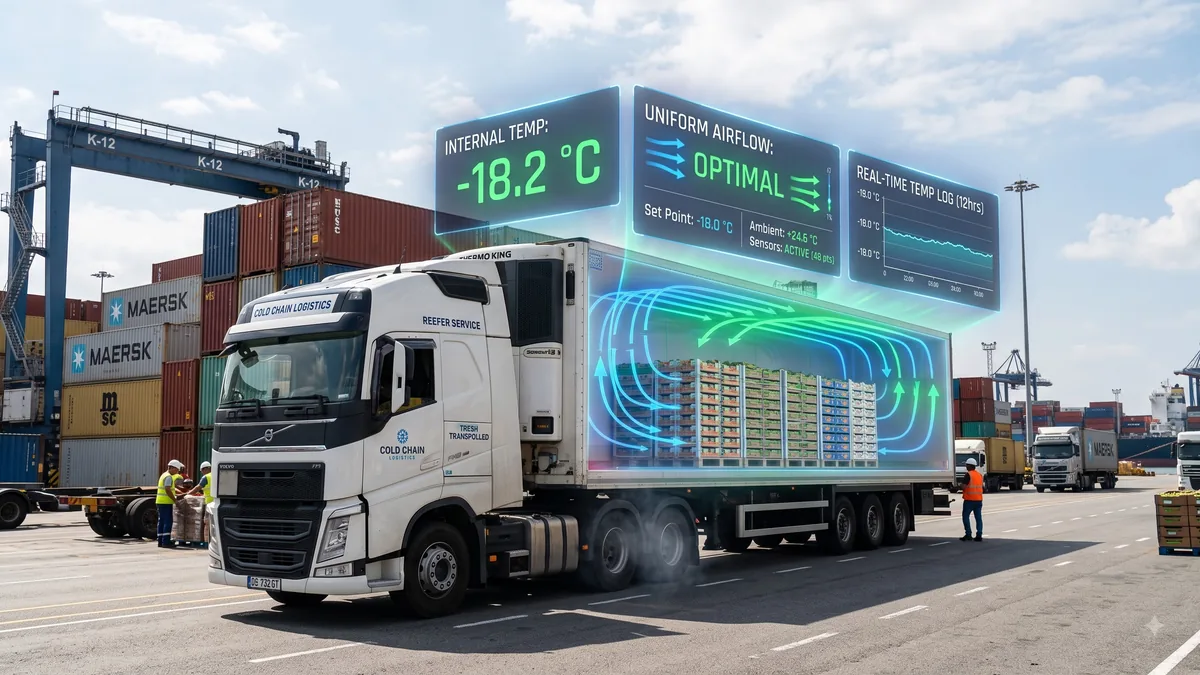
A refrigerated trailer carrying R1.2 Million worth of fresh poultry and dairy products departs a processing facility in Durban bound for supermarket distribution centers in Johannesburg. Halfway through the 600 km trip along the N3, the reefer unit compressor dies due to a broken drive belt. The driver, insulated by heavy engine noise in the cab, hears no local alarm. When the truck docks in Johannesburg 7 hours later, internal temperatures have climbed to 24°C, resulting in total cargo rejection.
In South Africa's perishable food logistics sector, silent reefer alarm failures destroy millions of Rands in fresh meat, produce, and dairy products every month. High summer temperatures in KwaZulu-Natal and Gauteng leave zero room for cooling breakdowns.
If your fleet transports perishable foods, relying on built-in reefer alarms or manual driver temperature checks is a multi-million Rand risk. This guide explains why local reefer alarms fail silently and how dual-alert telemetry prevents food spoilage.
---
Why Built-In Reefer Unit Alarms Fail to Protect Food Cargo
Most refrigerated trailers (Thermo King, Carrier Transicold) feature local control panels with red warning lights and audible buzzers. However, local alarms fail in transit for four common operational reasons:
1. **Cab Noise Insulation:** Modern truck cabs feature high soundproofing; drivers traveling at 80 km/h cannot hear local alarm buzzers mounted on the front exterior wall of trailer units. 2. **Reefer Power System Stalls:** If the reefer generator stalls or battery power fails, the entire local alarm circuit dies, producing no warning signal whatsoever. 3. **Overnight Sleep Dead-Zones:** Drivers sleeping at rest stops along the N1 or N3 do not see warning lights on exterior trailer panels until morning. 4. **Driver Tampering:** In dishonest operations, drivers occasionally turn off cooling units overnight to reduce diesel consumption, turning them back on shortly before arrival to fool manual arrival checks.
---
The 4 Engineering Pillars of Dual-Alert Cold Chain Telemetry
1. Battery-Powered Wireless BLE Temperature Probes
WizIOT cold chain architecture replaces fragile wired probes with industrial Bluetooth Low Energy (BLE 5.0) wireless sensors installed throughout the trailer.
- **Autonomous Power Supply:** Powered by internal industrial lithium batteries with 3+ year lifespans, operating continuously even if main truck or reefer power fails.
- **High-Precision Multi-Zone Logging:** Measures temperature every 60 seconds with ±0.2°C precision across -30°C to +50°C ranges.
- **5-Minute Non-Invasive Install:** Mounts cleanly on internal cargo walls without drilling holes through trailer thermal insulation.
2. Multi-Channel Escalating Alarm Protocol (3 AM Wake-Up Calls)
A temperature alert trapped on a web dashboard is useless at 3 AM. WizIOT dual-alert telemetry enforces an escalating multi-channel notification matrix:
- **Level 1 (0 Mins):** Instant Push Notification & Dashboard Alert to Fleet Control Room
- **Level 2 (3 Mins):** Automated SMS Alert to Driver & Duty Dispatcher
- **Level 3 (7 Mins):** Automated Voice Call Escalation to Fleet Manager & Quality Assurance Director
3. Magnetic Door Open & Thermal Leak Sensors
Frequent door openings during multi-stop retail deliveries introduce warm ambient air, causing rapid temperature spikes. WizIOT pairs BLE temperature probes with wireless magnetic door contact sensors, logging exact door open/close timestamps and alerting managers if doors remain open longer than authorized delivery windows.
4. Automated HACCP & Food Safety Compliance Reports
Manual temperature logbooks are rejected by major South African retail chains (e.g., Shoprite, Woolworths, Pick n Pay). WizIOT software automatically compiles continuous temperature data into single-click, tamper-proof PDF audit reports complete with GPS location overlays, temperature curves, and HACCP compliance documentation.
---
Real-World Impact: South African Perishable Logistics Case Study
A Durban-based refrigerated logistics carrier operating 45 reefer trailers supplying Gauteng retail centers implemented WizIOT dual-alert cold chain telematics.
Pre-Deployment Baseline: - Cargo Spoilage Rejections: 8 major incidents per year - Annual Financial Losses: R 4.8 Million in rejected food cargo - Average Time to Detect Cooling Breakdown: 4.5 hours
Post-Deployment (12 Months): - Cargo Spoilage Rejections: 0 incidents (100% cooling integrity maintained) - Average Response Time to Cooling Drop: Reduced to under 4 minutes - Insurance Premium Discount: 15% reduction achieved through validated HACCP compliance
---
Questions to Ask Cold Chain Telematics Vendors in South Africa
1. *Are your temperature sensors battery-powered BLE wireless units that operate independently of reefer power?* 2. *Does your system provide automated escalating voice phone calls to wake up managers during 3 AM emergencies?* 3. *What is the documented measurement accuracy of your temperature probes (is it ±0.2°C)?* 4. *Can your software generate single-click PDF HACCP compliance audit reports for retail receivers?* 5. *Do you provide certified local field installation teams in Johannesburg, Durban, and Cape Town?*
---
Protect Your Perishable Food Shipments Today
Eliminate silent refrigeration breakdowns and protect high-value food cargo across South African transport corridors. Deploy WizIOT wireless BLE temperature sensors and escalating dual-alert telemetry.
Request Cold Chain Telematics Proposal
---
Frequently Asked Questions (FAQs)
**Q1: How many BLE temperature sensors are required for a 12-meter refrigerated trailer?** We recommend 3 BLE sensors per 12-meter trailer: one near the front discharge vent, one in the center bay, and one near the rear doors to detect thermal gradient variations.
**Q2: Can BLE temperature sensors survive steam washdowns inside food trailers?** Yes. WizIOT BLE sensors feature IP68/IP69K waterproof enclosures designed to withstand high-pressure steam cleaning and chemical sanitization inside food trailers.
**Q3: How does the system handle multi-temperature trailers carrying frozen and chilled goods?** WizIOT software supports multi-zone tracking, allowing fleet managers to configure separate alarm thresholds (e.g., -20°C for frozen meat and +4°C for dairy) for different trailer compartments.
**Q4: Will temperature data be accepted by insurance adjusters during cargo claims?** Yes. WizIOT exports immutable, timestamped PDF temperature curves with GPS coordinates that serve as certified evidence for insurance adjusters during non-negligence cargo claims.
---
Related Articles
- Reefer Alarm Failure Destroyed $180K Vaccines: The BLE Temperature Sensor Backup That Saves Cold Chains
- WHO GDP Compliance for Vaccine Transport: The Cold Chain Monitoring System Nigerian Pharmas Trust
- Seafood Export Cold Chain: Preventing Spoiling in Long-Distance Fresh Fish Transport
- Relative Humidity Telemetry: Preventing Dehydration & Mold in Fresh Produce Exports
---
Explore WizIOT Solutions
Target Telematics Hubs & Enterprise Solutions
Protect Your Commercial Fleet Today
Request a live hardware demonstration, ±0.2% capacitive probe calibration certificates, and real-time anti-theft gateway trials.