Relative Humidity Telemetry: Preventing Dehydration & Mold in Fresh Produce Exports
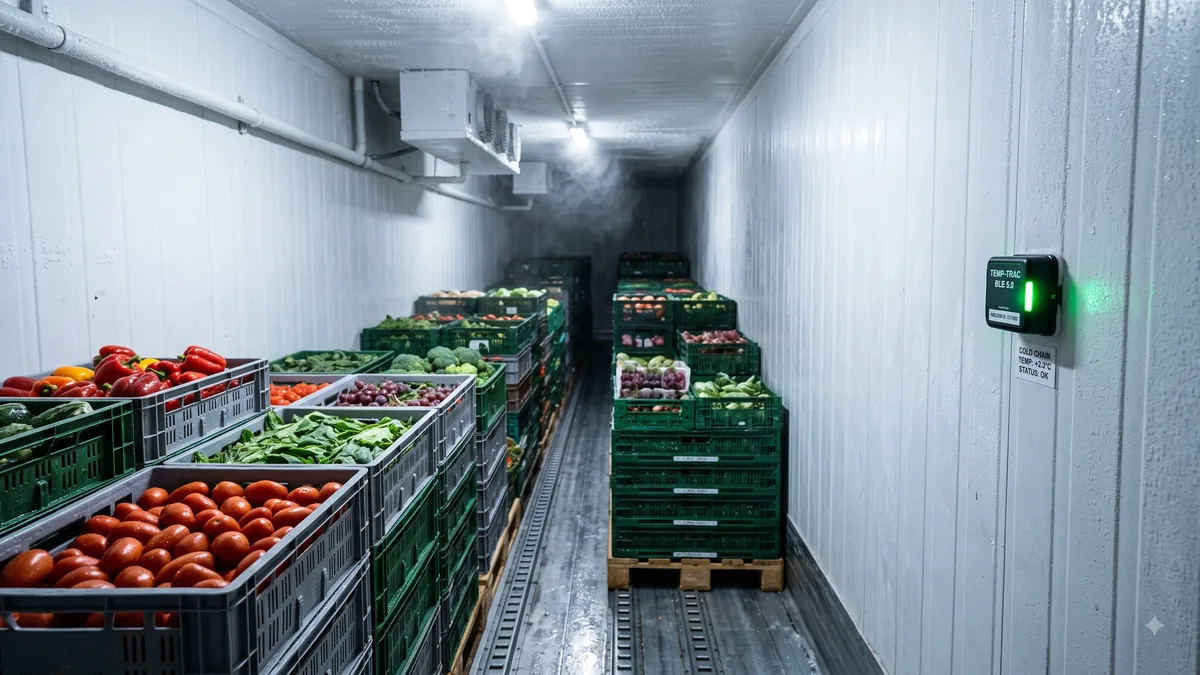
Table of Contents
- Why Relative Humidity (%RH) Determines Produce Quality
- Optimal Temperature & Relative Humidity Targets by Crop
- 4 Engineering Components of WizIOT Dual Temp/Humidity Telemetry
- Real-World Impact: Kenyan Horticultural Export Case Study
- Questions to Ask Cold Chain Telematics Vendors
- Protect Your Agricultural Exports Today
- Related Articles
- Explore WizIOT Solutions
E-Mobility & EV Fleets Telematics
WizIOT EV-BMS Telematics Controller + CAN-bus J1939 / CANopen Sniffer
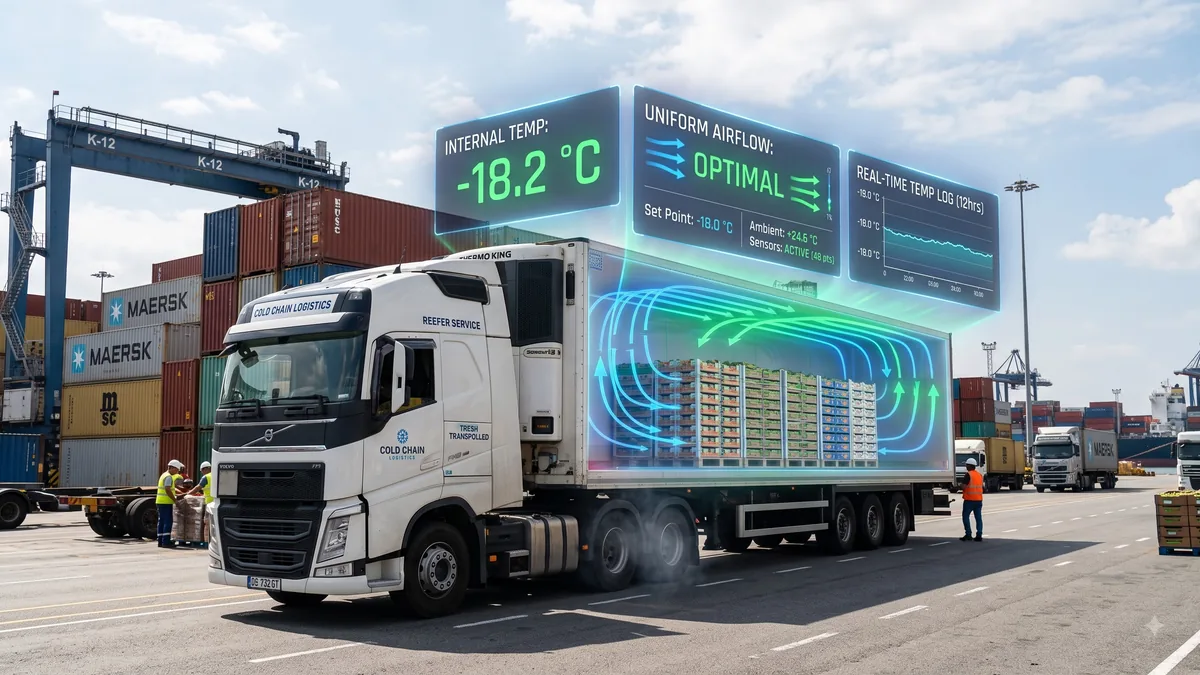
A high-value export shipment of fresh roses and avocados loaded in Nairobi, Kenya, arrives at a air-freight cargo terminal in Amsterdam after a 14-hour transit. While temperature charts show a steady +4°C, inspectors reject 30% of the flower consignment due to petal wilting and moisture loss, while avocados exhibit surface mold growth. The culprit? Relative humidity inside the trailer dropped to 55% during transit, causing rapid flower transpiration, while localized humidity spikes exceeded 95%, triggering mold spore germination.
In agricultural fresh produce and horticultural export logistics, monitoring temperature alone is a critical operational mistake. Fresh fruits, vegetables, and cut flowers are living, respiring agricultural products whose shelf life depends equally on Relative Humidity (%RH).
If your fleet transports fresh agricultural produce, cut flowers, or berry crops across regional or export corridors, this guide explains how combined temperature and relative humidity BLE sensors prevent cargo dehydration and fungal growth.
---
Why Relative Humidity (%RH) Determines Produce Quality
Fresh produce continuously exchanges moisture with surrounding cargo bay air. Humidity imbalances cause severe physical damage:
1. **Low Humidity (< 85% RH) - Moisture Loss & Wilting:** Air that is too dry pulls moisture directly from plant tissues, causing weight loss, shriveling in citrus/avocados, and stem wilting in cut flowers. 2. **High Humidity (> 95% RH) - Condensation & Mold Growth:** Air that is too humid causes moisture condensation on product surfaces, creating ideal breeding conditions for Botrytis cinerea (gray mold) and fungal rot. 3. **Respiration Acceleration:** Improper humidity levels accelerate plant respiration rates, depleting natural sugars and shortening post-harvest shelf life.
---
Optimal Temperature & Relative Humidity Targets by Crop
| Agricultural Crop | Target Temperature (°C) | Optimal Relative Humidity (%RH) | Moisture Risk | |---|---|---|---| | **Cut Flowers (Roses, Carnations)** | +1.0°C to +3.0°C | **90% to 95% RH** | Severe Petal Wilting | | **Avocados & Mangos** | +5.0°C to +8.0°C | **85% to 90% RH** | Dehydration & Skin Shriveling | | **Berries (Strawberries, Blueberries)** | +0.5°C to +2.0°C | **90% to 95% RH** | Gray Mold (Botrytis) | | **Citrus (Oranges, Lemons)** | +4.0°C to +7.0°C | **85% to 90% RH** | Rind Pitting & Weight Loss |
---
4 Engineering Components of WizIOT Dual Temp/Humidity Telemetry
1. High-Precision Wireless BLE 5.0 Temp/Humidity Sensors
WizIOT deploys compact, industrial BLE 5.0 wireless sensors that measure both Temperature and Relative Humidity simultaneously:
- **Sensirion Digital Sensor Element:** Certified accuracy of ±0.2°C for temperature and ±1.8% RH for relative humidity.
- **Micro-Porous Gore-Tex Membrane:** Protects internal humidity sensor elements against dust, water droplets, and agricultural spray chemicals while allowing free air diffusion.
- **3-to-5 Year Battery Life:** Powered by internal industrial LiSOCl2 lithium batteries operating in sub-zero and tropical environments.
2. Psychrometric Vapor Pressure Deficit (VPD) Analytics
WizIOT software processes raw temperature and humidity data to calculate **Vapor Pressure Deficit (VPD)**—the true thermodynamic driving force behind plant transpiration:
$$\text{VPD} = e_s(T) \times \left(1 - \frac{\text{RH}}{100}\right)$$
Where $e_s(T)$ is saturation vapor pressure at temperature $T$.
VPD analytics alert fleet managers if cargo bay conditions are actively dehydrating agricultural produce, allowing reefer humidity controls to be adjusted in real time.
3. Multi-Channel Dehydration & Condensation Alarms
WizIOT allows fleet managers to configure dual alarm boundaries: - **Dehydration Alarm:** Triggers if %RH drops below crop-specific thresholds (e.g., < 85% RH for roses) for longer than 15 minutes. - **Condensation Warning:** Triggers if %RH reaches 98% RH alongside rapid temperature drops, warning of impending dew-point condensation.
4. Consolidated Agricultural Export Audit Certificates
WizIOT software automatically compiles continuous temperature, humidity, and VPD metrics into single-click PDF export certificates. Reports feature dual-axis temperature and humidity graphs with GPS location overlays, satisfying international phytosanitary and import inspection standards.
---
Real-World Impact: Kenyan Horticultural Export Case Study
A major Kenyan flower exporter operating 35 refrigerated trucks transporting roses from Naivasha farms to Nairobi Jomo Kenyatta International Airport (JKIA) deployed WizIOT BLE temp/humidity telematics.
12-Month Export Performance Results: - **Import Quality Rejections at EU Cargo Hubs:** Reduced from 6.8% to under 0.2% - **Flower Weight Loss in Transit:** Reduced by 4.2% through continuous 92% RH maintenance - **Export Cargo Value Preserved:** Saved $310,000+ in prevented crop degradation claims
---
Questions to Ask Cold Chain Telematics Vendors
1. *Do your sensors measure Relative Humidity (%RH) as well as Temperature?* 2. *What is the documented measurement precision of the humidity sensor element (is it ±2.0% RH or better)?* 3. *Does the sensor feature a protective membrane against agricultural chemicals and steam washdowns?* 4. *Does your telematics software calculate Vapor Pressure Deficit (VPD) metrics for agricultural produce?* 5. *Can the platform export single-click PDF audit reports containing combined temperature and humidity graphs?*
---
Protect Your Agricultural Exports Today
Eliminate produce dehydration and fungal spoilage during long-haul transport. Deploy WizIOT's wireless BLE temperature and humidity sensors, VPD analytics, and automated export compliance reports.
Request Produce Telematics Proposal
---
Frequently Asked Questions (FAQs)
**Q1: Can BLE humidity sensors operate accurately inside high-moisture flower trucks (95% RH)?** Yes. WizIOT BLE humidity sensors incorporate micro-porous Gore-Tex protective membranes that allow water vapor diffusion while preventing liquid water droplets from saturating the sensor element.
**Q2: How many temp/humidity sensors are required for a standard 40-foot reefer trailer?** We recommend 3 sensors per 40-foot trailer: one near the reefer air discharge, one in the center cargo bay, and one near the rear doors to detect moisture gradient shifts.
**Q3: Can humidity telemetry data be integrated with automated reefer humidity controls?** Yes. WizIOT telematics gateways can communicate via CAN-bus to modern Thermo King and Carrier reefer controllers to adjust active humidification or de-humidification settings automatically.
**Q4: How does relative humidity monitoring help reduce cargo insurance claims?** Immutable PDF temp/humidity graphs provide definitive proof that carrier climate conditions remained within contractual limits, eliminating carrier liability during post-harvest crop degradation disputes.
---
Related Articles
- Seafood Export Cold Chain: Preventing Spoiling in Long-Distance Fresh Fish Transport
- WHO GDP Compliance for Vaccine Transport: The Cold Chain Monitoring System Nigerian Pharmas Trust
- Reefer Alarm Failure Destroyed $180K Vaccines: The BLE Temperature Sensor Backup That Saves Cold Chains
- Reefer Alarm Silent Failure: The Dual-Alert System That Prevents R1.2M Food Cargo Losses
---
Explore WizIOT Solutions
Target Telematics Hubs & Enterprise Solutions
Protect Your Commercial Fleet Today
Request a live hardware demonstration, ±0.2% capacitive probe calibration certificates, and real-time anti-theft gateway trials.