Seafood Export Cold Chain: Preventing Spoiling in Long-Distance Fresh Fish Transport

Table of Contents
E-Mobility & EV Fleets Telematics
WizIOT EV-BMS Telematics Controller + CAN-bus J1939 / CANopen Sniffer
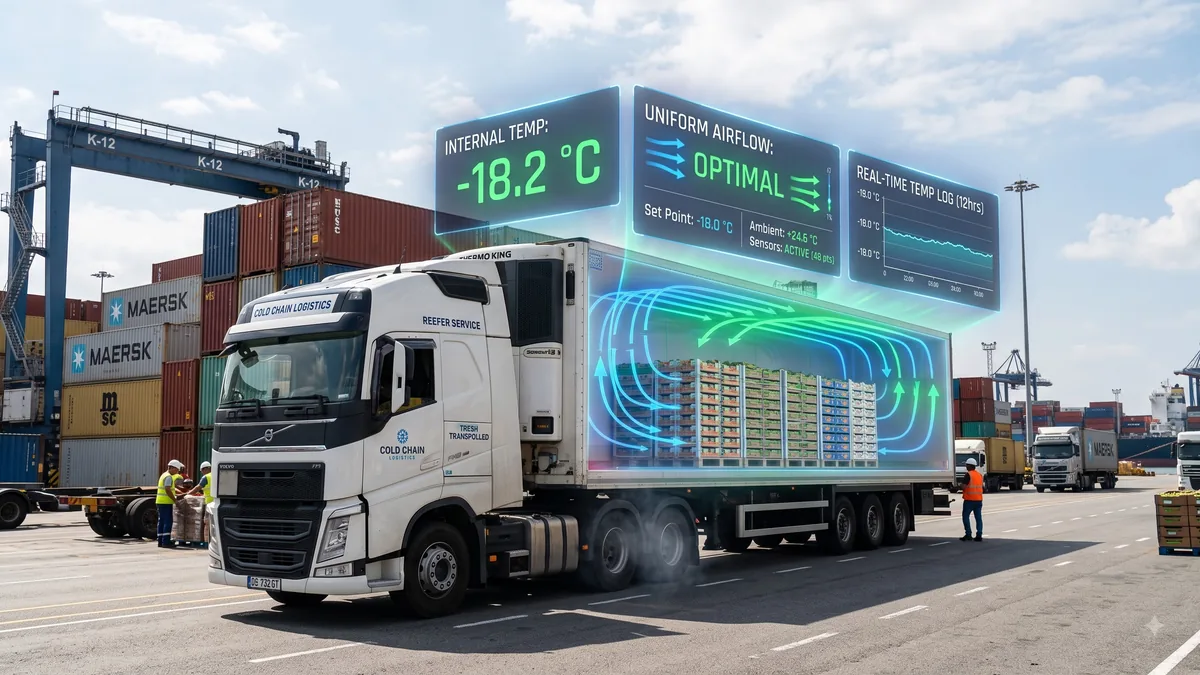
A seafood export enterprise operating 25 refrigerated trucks hauling fresh tuna, Nile perch, and prawns from coastal ports in Mombasa and Dar es Salaam to regional airports experiences a major financial rejection: an international air-freight shipment of fresh fish valued at $160,000 is rejected upon arrival in Europe due to histamine formation and texture degradation. While main trailer air temperature showed +3°C, internal fish ice-slurry boxes spiked to +6°C during a 6-hour highway delay under intense equatorial heat.
In fresh seafood and marine export logistics, temperature control is uniquely unforgiving. Seafood is highly perishable; bacteria (such as Morganella morganii) proliferate rapidly above +2°C, converting histidine into toxic histamine that causes severe food poisoning and immediate cargo destruction.
If your fleet transports fresh or frozen seafood, relying on basic ambient reefer gauges is a high-risk operational strategy. This guide explains how multi-probe BLE wireless telemetry maintains strict 0°C to +2°C ice-slurry integrity.
---
The Biological Realities of Fresh Seafood Cold Chain Logistics
Fresh fish cold chain logistics operates under strict biological constraints:
1. **The 0°C to +2°C Ice-Slurry Boundary:** Fresh (non-frozen) fish must be maintained at exact 0°C to +2°C temperatures in melting ice slurry. A temperature rise of just 3°C doubles bacterial growth rates. 2. **Histamine Risk Above +4°C:** Exposure to temperatures above +4°C for as little as 2 hours triggers irreversible histamine formation, leading to immediate rejection by European (EFSA) and US (FDA) food safety inspectors. 3. **High Salt & Moisture Corrosion:** Seafood transport environments feature high humidity, melting ice saltwater runoff, and salt air corrosion that rapidly destroys standard wired telematics sensors.
---
4 Engineering Components of WizIOT Seafood Telematics
1. IP68/IP69K Waterproof Wireless BLE Temperature Probes
WizIOT seafood cold chain architecture replaces fragile wired sensors with industrial Bluetooth Low Energy (BLE 5.0) wireless probes.
- **Hermetic Polyurethane Resin Encapsulation:** Fully sealed IP68/IP69K enclosures impervious to saltwater corrosion, ice-slurry submersion, and high-pressure washdowns.
- **Stainless-Steel Immersion Needle Probes:** External stainless-steel penetration probes designed to insert directly into ice slurry or fish core tissues, measuring internal product temperature rather than ambient trailer air.
2. Narrow-Tolerance 0°C to +2°C Excursion Alarms
WizIOT software enforces strict, narrow-tolerance thermal safety boundaries for seafood haulage:
- **Narrow Safety Window:** Configured min/max boundaries (+0.0°C to +2.0°C).
- **Sub-Minute Alert Escalation:** If seafood core temperature rises above +2.5°C for longer than 8 minutes, WizIOT triggers an immediate multi-channel escalation matrix:
- - Level 1: In-cab driver buzzer & mobile push notification
- - Level 2: SMS alert to fleet dispatcher
- - Level 3: Automated voice call to Quality Assurance Director
3. Automated Melt-Ice Drainage & Door Open Telemetry
Melting ice slurry drains can become blocked, causing warm water accumulation around fish crates. WizIOT pairs BLE temperature probes with: - **Wireless Liquid Level Sensors:** Detects standing water accumulation in trailer drainage troughs. - **Door Contact Switches:** Logs exact door open/close timestamps during fish market loading.
4. Consolidated HACCP & EU Export Compliance PDF Reports
WizIOT software compiles continuous seafood temperature data into single-click PDF export reports: - Displays unbroken temperature curves from port landing to airport loading. - Calculates Mean Kinetic Temperature (MKT) and histamine risk indices. - Includes SHA-256 digital cryptographic hash signatures satisfying EU EFSA, US-FDA, and HACCP food safety standards.
---
Real-World Impact: African Seafood Export Case Study
A major East African seafood exporter operating 25 refrigerated vehicles transporting fresh fish from Lake Victoria and coastal ports to airport export hubs deployed WizIOT BLE seafood telematics.
12-Month Performance Results: - **International Cargo Rejections:** Reduced from 7 incidents per year to 0 (100% export acceptance) - **Histamine Formation Claims:** 100% eliminated across all air-freight consignments - **Annual Financial Savings:** Saved $380,000+ in prevented seafood spoilage claims
---
Questions to Ask Seafood Telematics Vendors
1. *Are your temperature sensors IP68/IP69K waterproof rated for continuous ice-slurry and saltwater submersion?* 2. *Does your system support stainless-steel penetration probes to measure internal fish core temperatures?* 3. *Can your software enforce narrow alarm boundaries (+0°C to +2°C) with sub-minute alert escalation?* 4. *Does your platform calculate histamine formation risk indices for fresh fish transport?* 5. *Are exported PDF audit reports certified for EU EFSA and US-FDA import compliance?*
---
Guarantee Fresh Seafood Export Quality Today
Eliminate histamine formation and cargo rejections across your seafood transport operations. Deploy WizIOT's IP68 wireless BLE immersion probes, narrow-tolerance alerts, and HACCP export compliance software.
Request Seafood Telematics Proposal
---
Frequently Asked Questions (FAQs)
**Q1: How do BLE temperature sensors communicate when submerged inside iced fish crates?** WizIOT seafood probes utilize high-gain BLE 5.0 transmitters engineered to penetrate wet ice and plastic crates, relaying temperature data to the trailer gateway reliably.
**Q2: What is the battery lifespan of IP68 waterproof BLE seafood probes?** Powered by internal industrial LiSOCl2 lithium batteries, WizIOT waterproof seafood probes operate continuously for 3 to 5 years without battery replacement.
**Q3: Can the system monitor frozen seafood (-18°C) as well as fresh iced fish (0°C)?** Yes. WizIOT software allows fleet managers to switch between "Fresh Fish Mode" (0°C to +2°C) and "Frozen Seafood Mode" (-22°C to -18°C) with a single click.
**Q4: How does the system help settle seafood insurance claims quickly?** WizIOT immutable PDF temperature logs provide proof of unbroken 0°C to +2°C cooling, allowing carriers to settle insurance claims within 14 days if transport delays occur.
---
Related Articles
- Reefer Alarm Failure Destroyed $180K Vaccines: The BLE Temperature Sensor Backup That Saves Cold Chains
- WHO GDP Compliance for Vaccine Transport: The Cold Chain Monitoring System Nigerian Pharmas Trust
- Relative Humidity Telemetry: Preventing Dehydration & Mold in Fresh Produce Exports
- Reefer Alarm Silent Failure: The Dual-Alert System That Prevents R1.2M Food Cargo Losses
---
Explore WizIOT Solutions
Target Telematics Hubs & Enterprise Solutions
Protect Your Commercial Fleet Today
Request a live hardware demonstration, ±0.2% capacitive probe calibration certificates, and real-time anti-theft gateway trials.